


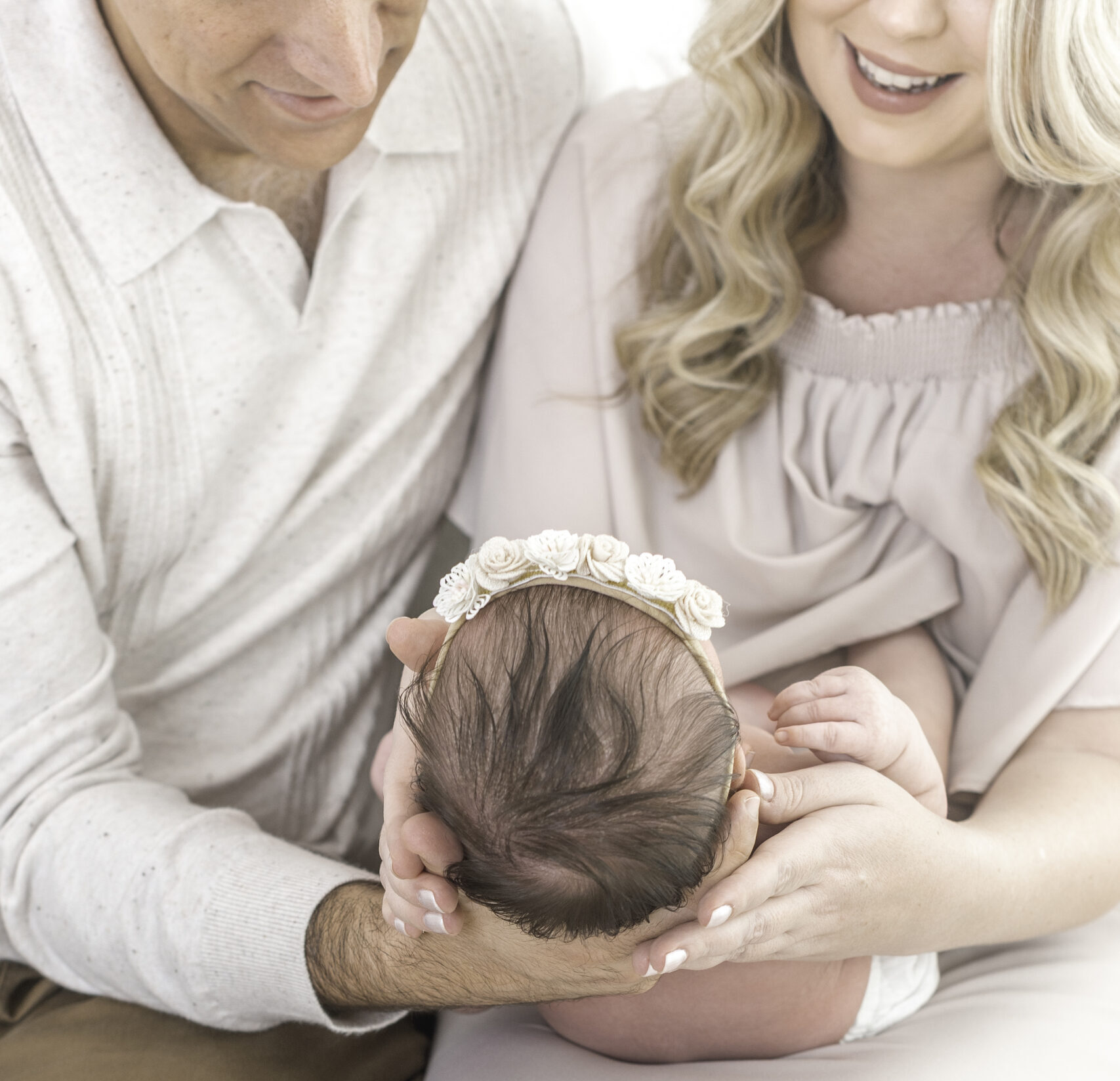

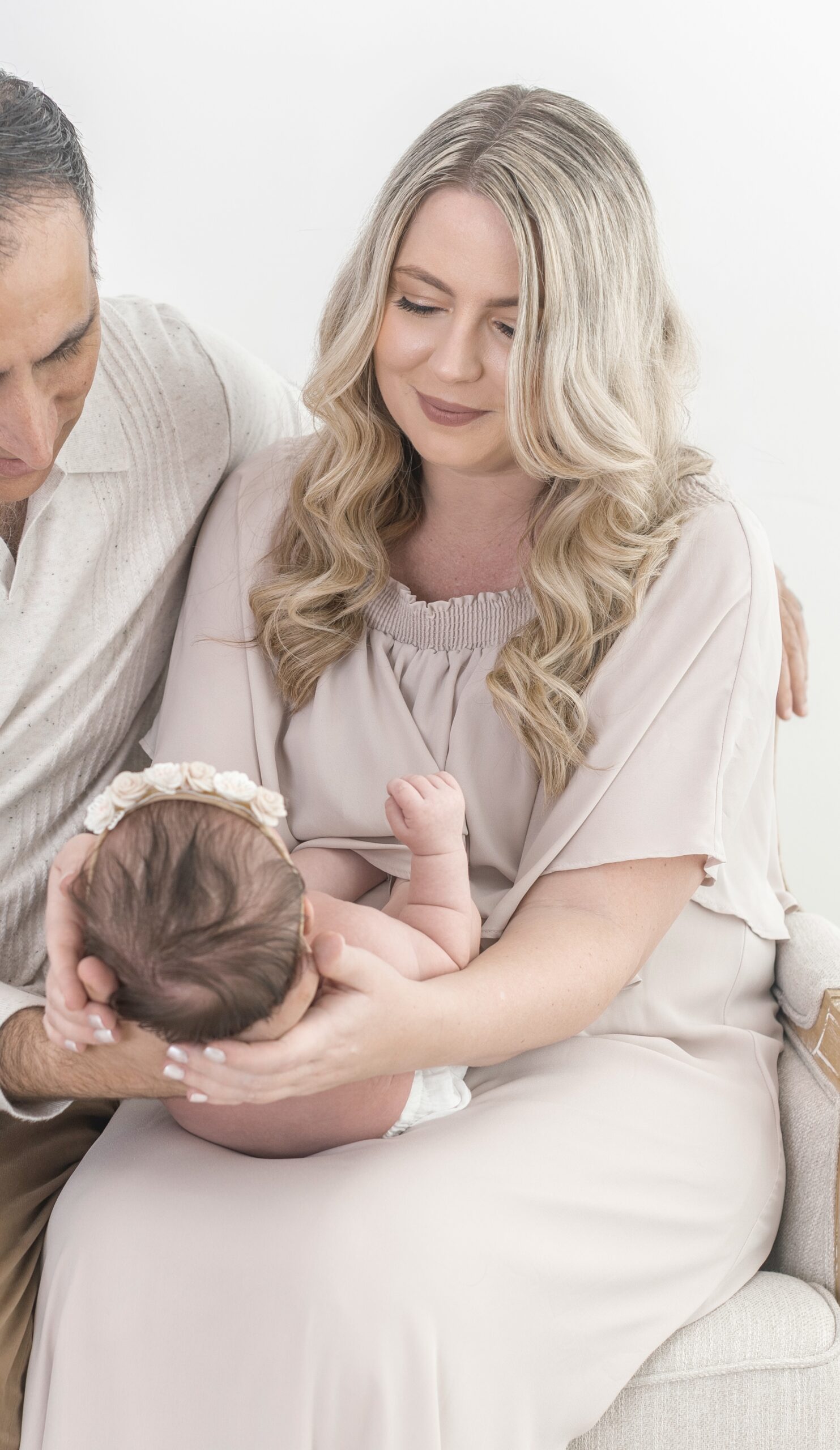
When my baby girl was born six months ago, I didn’t realize how much my life would become a series of tiny, interconnected moments. Habit stacking, or what I am now calling ritual layer, has quickly become a part of my everyday reality during postpartum. Not grand gestures or elaborate routines as I had imagined, but small habits layered into my daily routine—each one making space for the next.
As a new mother with big dreams for the next stage of my business and still hosting a podcast and platform, I needed a way to care for myself that didn’t require huge blocks of uninterrupted time—because those simply don’t exist anymore.
This is what I call ritual layering—a more conscious, embodied approach to habit stacking. It’s not a rigid schedule, but a flowing rhythm that adapts to the unpredictability of life with a baby while still honoring my need for routine, self-care, and coming back to my own presence.
What Ritual Layering Actually Means (And How It Builds on Habit Stacking)
If you’re unfamiliar with habit stacking, it’s simply the practice of linking a new habit to an existing one. Instead of relying on willpower or motivation (both of which are precious commodities when you’re sleep-and energy-deprived), you use established behaviors as anchors for new ones.
Ritual layering takes this concept deeper. It’s habit stacking with intention, presence, and sensory awareness. It’s not just about efficiency—it’s about creating moments throughout your day that feel restorative, grounding, and aligned with who you are becoming as a mother.
For new moms, this approach feels less like trying to optimize your life and more like intentionally adapting to its rhythm—in the best possible way. Because when your baby’s nap schedule shifts daily (hello sleep regressions) and your energy levels are unpredictable, you need routines that bend without breaking.
Morning Habit Stacking and Where Intention Begins
Waking and Grounding (5:00-8:00 a.m.)
My mornings begin somewhere between 5:00 and 6:30 a.m., depending entirely on how my baby slept the night before. There’s no alarm clock anymore, just the sound of her stirring. Luckily, I’ve always woken up best through my internal alarm clock, and waking with the baby has become a ritual in itself. It’s natural and not forced, which is nice.
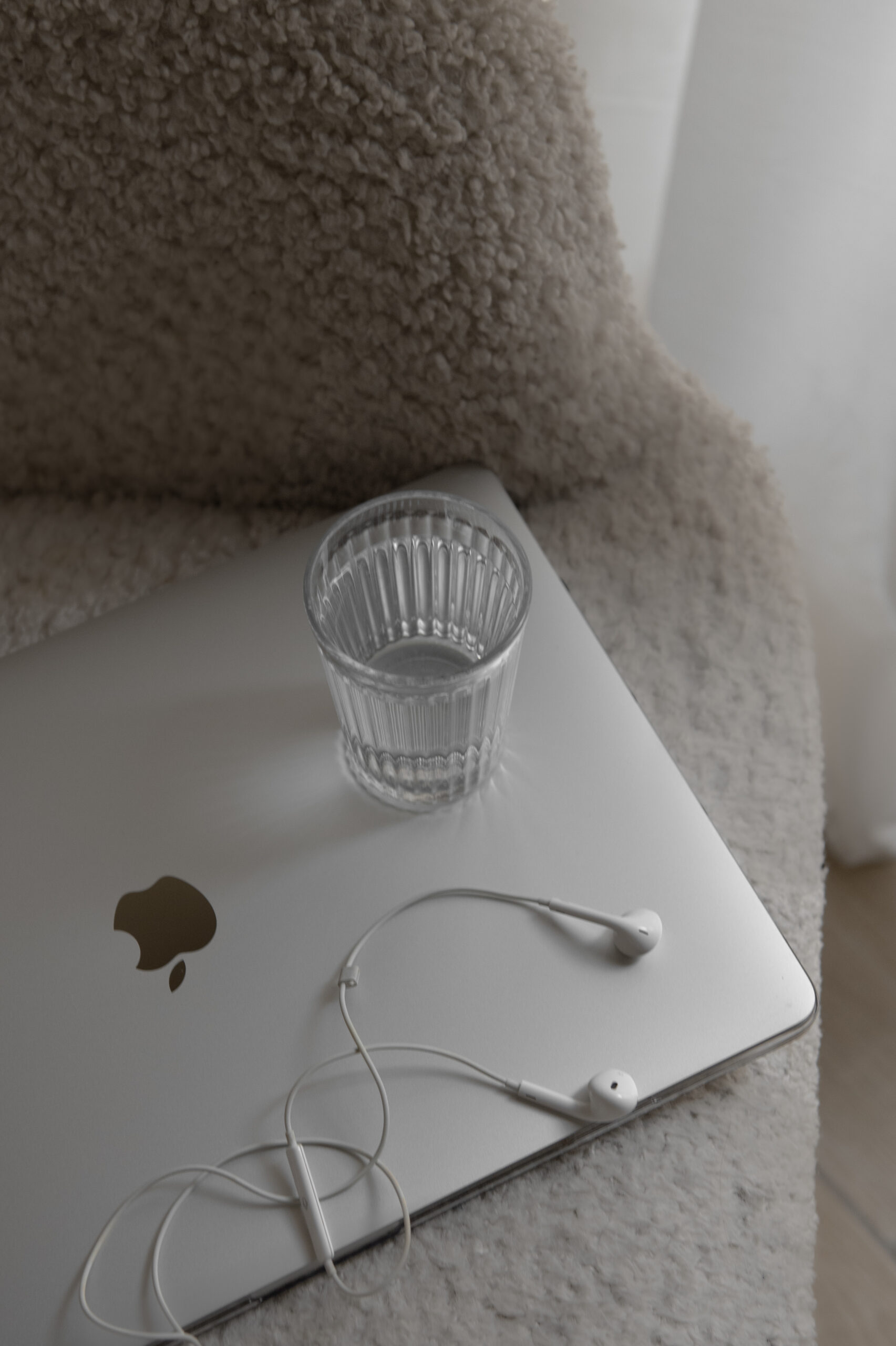
The first thing I do—before anything else—is drink a full glass of water. I keep it on my nightstand, specifically for this reason: either the rest of the glass from before I go to bed, or a decanter of water within reach. Then I make the bed, use the restroom, and immediately after, I open the blinds. I’ve always found that sunshine and natural light signal to my body: we’re awake now. Let the day begin. It’s also comforting to see the first break of light on the really early mornings.
Then, my husband and I change the baby, prepare her bottle, feed her, and we’re out the door for a brief morning walk (once there is daylight, of course). This isn’t an elaborate outing like others we plan for the day—just 15 or 20 minutes around our complex—but it’s become a great way to start the morning. The fresh air, the movement, and the three of us together before the day scatters us into our separate tasks.
Coffee, Nourishment, and Play (7:00-8:00 a.m.)
When we are settled in for the morning, we put the baby in her bouncer. I either put on classical music for babies or a story for her while I start my morning habits. This is where ritual layering really comes alive for me. Building a sustainable morning routine as a postpartum mom starts with these small, anchored moments.
I’ve recently completed a four-day trial of the Eli Cortisol Tests and will take them during this period (more on this below). Then I’d either make coffee and breakfast at home or treat myself to a brief outing to pick up coffee and a light bite for my husband and me.
At home, I’ll enjoy my coffee and a light bite, then take my vitamins and supplements. Currently, I take a probiotic daily (a lifesaver as a postpartum mom), and I’ve recently been using the Primeadine® GF supplements. These supplements have done wonders for my cognitive health and gives such a smooth energy to keep me going throughout the day.
Then, it’s full, uninterrupted playtime and engagement with my baby before her first nap—singing, dancing, and getting her energized and moving. By 8:30/9:00 a.m., I hope she’ll go down for her first nap after completing the change, bottle, and soothing routine. Some days this happens easily. Other days it doesn’t. And that’s where the flexibility of ritual layering becomes essential—it’s not about perfection, it’s about adapting.
Habit Stacking for Solitude and Connection
Midday Movement and Walking with Baby (10:30 a.m.-12:00 p.m.)
When baby wakes from her first nap (usually between 10:30 and 11:00, or later if she fell asleep later), we go through our routine—change, bottle, engagement—and then I take her out for a longer stroller walk. This is when I layer in connection and mindfulness.
Sometimes I’ll call a friend to catch up. Other times, I’ll listen to a podcast that feeds my curiosity or a meditation track that grounds me. This walk serves multiple purposes: it brings me closer to my 5,000-step-a-day goal, it’s relaxing and enjoyable for baby, and it fills my cup in whatever way I need that day.
Creative Windows and Working During Downtime
While she naps or does floor play later in the morning or early afternoon, I catch up on work, creative projects, or admin tasks. I’ve learned to use these pockets of time intentionally, knowing they’re fleeting.
On days when I’m recording episodes for The Conscious Publicist Podcast, I’ve built in another small but powerful ritual: 5 to 10 minutes with my Clearlight Personal Red Light Tower before I hit record. I sit in front of the tower, letting the red light therapy work its magic, and I feel my mood lift and my energy sharpen. There’s something about this practice that shifts me from “tired mom mode” into “present host mode.” It’s a mini reset button—one that boosts my vitality and helps me show up more fully for the conversation I’m about to have.
This is ritual layering at its most practical: I need to record anyway, so I’ve anchored a wellness practice to the beginning of that task. The red light tower has become my pre-podcast ritual, the same way some people might have a cup of tea or do vocal warm-ups. It’s become part of my creative preparation.
Solo Movement and Walking for Solitude
And when she naps again, I often take a solo walk to complete my step goal. These walks alone have become a form of moving meditation—a chance to process, breathe, and just be without anyone needing me.
What I Learned About Cortisol (And Why Bedtime Consistency Matters)
A few weeks ago, I began using the 4-day at-home cortisol testing kit from Eli Health. What I discovered changed how I think about my evening routine entirely.
The results were clear: my cortisol levels were within normal range on the days when I went to bed at the same time. But on nights when my bedtime varied, my cortisol was noticeably low. What I appreciated about these tests was that they offered a different lens into how my body responded to consistency versus imbalances in my routine.
Understanding my cortisol patterns became essential for my postpartum mental health and overall well-being. Now, I aim to get to bed between 9:00 and 9:30 p.m., which works perfectly since we typically get the baby to sleep anywhere between 7:30 and 8:30 p.m. That hour buffer gives me time to wind down through my evening rituals if I wasn’t able to do them earlier—the vibration plate, the sauna blanket, and the transition from “mom mode” to rest mode—more on this shortly.
The testing also made me more aware of other cortisol-supporting habits throughout my day: morning sunlight, movement, meditation tracks during walks, and evening heat therapy. The 4-day testing gave me objective information about what my body actually needs in postpartum, not what I think it should need. And that information has become its own form of conscious habit stacking—using data to inform rituals and using rituals to support biology.
Evening Habit Stacking and The Ritual of Reclaiming My Body
Setting the Stage for Restoration
When baby goes to sleep for her last nap of the day, or sometimes even after she’s in bed for the night, I start my evening rituals. This is when I reclaim my body and my energy in the most intentional way.
I spend about 10 minutes on my Merach Vibration Plate, targeting my legs, arms, and core for lymphatic drainage and pelvic floor support. Sometimes I do this in the morning, depending on how the day unfolds, but I’ve found that placing it before my evening sauna session creates the perfect sequence. The gentle vibration gets my body moving and my lymphatic system activated, which feels especially important for postpartum recovery as my body continues to heal. The physical movement feels grounding.
The Cornerstone Ritual with My Sauna Practice
Then I transition into what has become the cornerstone of my postpartum self-care: my HigherDOSE Sauna Blanket. For a full 60 minutes, I wrap myself in the infrared heat and really slip into relaxation. This is full sensory immersion. I turn off the main lights (if it’s fully dark out), light my selenite lamp, and either listen to binaural frequencies or soothing music.
The sauna blanket has become a non-negotiable boundary between the demands of the day and my own restoration. The gentle heat penetrates deeply, and I can feel my muscles releasing tension I didn’t even know I was holding. My jaw unclenches, my shoulders drop, and my breath deepens.
What This Ritual Gives Me
What I love most about this practice is that it serves multiple purposes at once. Physically, infrared heat supports circulation, aids muscle recovery, and promotes detoxification—all things my postpartum body needs as it continues to heal and adjust. Heat therapy also supports my cortisol regulation, which directly ties back to the data I’m tracking with Eli Health. I can actually feel my nervous system shifting from “go mode” to “rest mode.”
But beyond the physical benefits, the sauna blanket creates a cocoon of stillness. For 60 minutes, I’m untouchable. Sometimes I’ll check my phone or schedule emails for the next morning, but for the most part, I try not to think about what needs to happen next. Sometimes the baby will be in the room with me, playing with my husband, but in those moments, he allows me the space to just be—in the heat, meditating, breathing, and existing.
Why This Has Become Non-Negotiable
This practice has taught me something so important about postpartum self-care: it’s not enough to just “take breaks.” I need rituals that actively restore me—rituals that feel luxurious and intentional, not afterthoughts squeezed between tasks. The sauna blanket gives me that. It’s an intentional pause, a recalibration, and a return to myself.
And because I aim to stack it with the baby’s last nap of the day, it happens consistently. The routine makes it possible. I’m not trying to “find time” for it—the time is already built into the rhythm of our day.
This evening stack has become non-negotiable for me. It’s the ritual that reminds me I’m not just a mother—I’m still a whole person with needs, with a body that deserves deep care, with a mind that craves stillness and heat and intentional rest.
Why Ritual Layering Supports Habit Stacking in the Postpartum Season
What I’ve come to appreciate about ritual layering is that it doesn’t demand more from me. It simply asks me to be intentional about what I’m already doing—habit stacking with consciousness. Small habits, when layered consciously, become powerful tools for maintaining your sense of self during this transformative season.
My simple morning routine became an anchor—I added supplements and cortisol tracking. The walks I was already taking? I layered in podcasts and meditation. Recording podcast episodes gave me the perfect opportunity to add 5 to 10 minutes with my red light tower beforehand to boost my mood and energy. And the baby’s nap times? Those became windows for movement and my sauna blanket sessions.
That last stack has been transformative. Because the baby’s evening nap happens around 4:00 p.m. with semi-predictable consistency, I know I have a window. And instead of spending that window scrolling or half-working, I’ve claimed it for deep restoration. The sauna blanket requires me to be still, present, and fully committed to the practice. It’s not something I can do half-heartedly, which is exactly why it works.
The beauty of this approach is that it meets you where you are. There’s no guilt about what you’re not doing, only gentle awareness of how you can make what you are doing work harder for you.
Making Ritual Layering Simple, Fun, and Achievable for Building Habits That Last
If you’re a postpartum mom (or really, any new mom) looking to build layered rituals that actually stick, here are simple ways to begin:
Start with what’s already working. Don’t try to overhaul your entire life. Look at what you’re already doing consistently and ask: what could I add to this that would serve me?
Let go of rigid timing. My schedule says “8:30 a.m. nap,” but some days it’s 9:00 or 10:00. The ritual stack still works because it’s tied to the action (nap time), not the clock.
Stack for joy, not just productivity. Yes, I use the baby’s nap time to work. But I also use my stroller walks to call friends, laugh, or decompress. Balance the functional with the nourishing.
Keep it sensory. Music for the baby, the comfort of coffee in my hands, the glow of red light therapy before creative work, the vibration plate under my feet, the enveloping heat of the sauna—these sensory anchors make the habits feel less like tasks and more like experiences. The sauna blanket in particular has taught me that the more immersive a ritual feels, the more likely I am to protect it. When something engages your full body and senses, it becomes memorable—almost sacred.
Give yourself permission to skip. Some days the sauna doesn’t happen. Some days I don’t hit 5,000 steps. The routine is there to support me, not control me.
Ritual Layering vs. Traditional Habit Stacking
Traditional habit stacking focuses on efficiency and productivity—linking behaviors to accomplish more. Ritual layering honors that foundation while adding depth: sensory engagement, presence, and the recognition that some moments deserve to be sacred, not merely optimized.
When I stack my morning coffee with supplements and cortisol testing, that’s habit stacking. When I intentionally light my selenite lamp, turn off the overhead lights, and immerse myself in 60 minutes of infrared heat while listening to binaural frequencies—that’s ritual layering. Both have their place in my daily life, but the rituals are what truly restore me.
For conscious moms, this distinction matters. We’re not just trying to be more productive—we’re trying to stay whole, present, and connected to ourselves while caring for another human. Ritual layering gives us permission to make self-care feel sacred rather than a task to check off a list.
The Unexpected Gift
The most surprising thing about ritual layering in this season is how much it’s taught me about presence. By linking one small action to the next with intention, I’m more aware of each moment as it unfolds. I’m not rushing through the morning to get to the “real” part of the day. The morning walk is the real part. The coffee, music, and dancing with my baby are the real parts. The 60 minutes wrapped in heat and stillness in my sauna blanket is the real part.
Postpartum life can feel like you’re constantly waiting—for the next nap, for the next feeding, and for things to get easier. But ritual layering has helped me find the rhythm within the waiting. It’s helped me see that these small habits, stacked with intention—the morning light, the walks, the evening restoration—are actually the foundation of a daily life I’m proud to live.
These small, stacked moments are what new mothers need most: not perfection, but presence.
Not perfect or polished. But present, intentional, and mine.
Copyright 2026 – Simply Ashley Graham – All Rights Reserved


Read the Comments +